

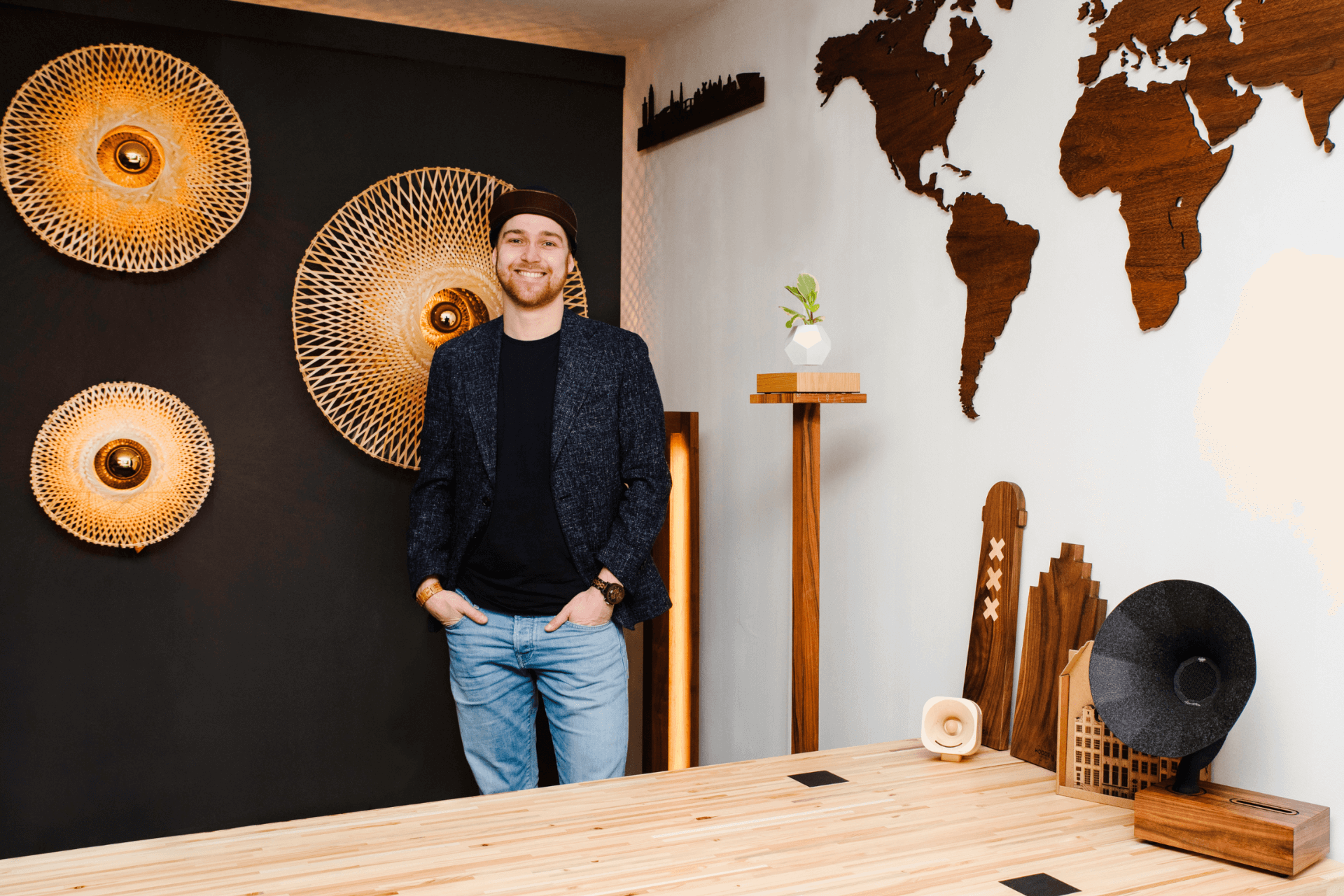
Ten years ago, Wooden Amsterdam started with curious object.
A father and his son came across a wooden speaker. Clean, tactile, and striking. It was a small product, impeccably made, that carried a presence. That moment sparked an idea. A shared curiosity about what happens when design, technology, and natural materials come together with care.
That curiosity became the basis of Wooden Amsterdam.

The first step
In 2015, founder Wieger Josemans was working in web design when his father Hans discovered the Trobla wooden speaker. They saw more than a well-made object. They saw potential in the people behind it.
They travelled to Slovenia to meet the makers. The craftsmanship spoke for itself. The story behind it had not yet reached a wider audience. That gap became the starting point.
Hans introduced the product directly to stores. Wieger built the online platform from the ground up. Together, they launched Wooden Amsterdam as a place where design and material could be experienced in a more meaningful way.
What began with one product quickly opened the door to many others.
Built to last
Wood has a presence that changes how you experience a space. It carries texture, warmth, and depth in a way that feels immediate.
It is also a material with strong environmental potential. Renewable, reusable, and recyclable when sourced responsibly. These qualities shaped the direction of Wooden Amsterdam from the beginning.
Every product added to the collection follows a clear principle. It should last. In quality, in function, and in how it fits into daily life.
Choosing a well-made object over a disposable one seems small in isolation. Over time, these decisions build something larger. A shift in how we value the things we bring into our homes.
The role of craftsmanship
Each product tells a story about the person who made it.
Wooden Amsterdam works with craftsmen across Europe and beyond. Small workshops, independent makers, and studios that understand their material deeply. The process is hands-on, precise, and rooted in experience.
Wood behaves differently depending on its type and treatment. Maple feels clean and light. Walnut carries a darker, richer tone. Padouk brings depth with its red hues. These differences shape each piece.
No two items are identical. That variation gives wooden products their character. It also creates a stronger connection between the object and the person using it.
A kitchen board becomes part of daily rituals. A desk accessory changes how a workspace feels. A small object can shift the atmosphere of a room without demanding attention.
Designing with Amsterdam in mind
Over time, Wooden Amsterdam moved into creating its own designs.
The city itself became a source of inspiration. The narrow canal houses, the rhythm of the facades, the quiet details that define Amsterdam’s streets. These elements found their way into the brand’s product line.
The first wooden canal house was modelled after a real building on the Herengracht. Carefully translated into wood, it captured both form and feeling. More designs followed, each rooted in a specific location.
These pieces carry a sense of place. They connect people to the city in a subtle, tangible way. Small objects that hold meaning beyond their size.

A family effort
From the beginning, Wooden Amsterdam has been shaped by close collaboration.
What started as a project between father and son grew into a wider team, while keeping the same mindset. Decisions are made with care. Growth happens step by step. Relationships with makers and partners are built over time.
There is a sense of responsibility in how the brand operates. Toward the people involved, toward the materials used, and toward the customers who bring these products into their lives.
That consistency has defined the past ten years.
Sustainability in practice
Sustainability at Wooden Amsterdam is grounded in daily choices.
The brand works with responsibly sourced wood, often from FSC-certified forests. This ensures that materials come from managed environments where ecosystems are protected and future growth is considered.
There is also an ongoing contribution to reforestation projects, supporting the planting and preservation of trees. These efforts extend the impact beyond the products themselves.
Each decision adds a layer. Sourcing, production, packaging, and partnerships all play a role. Over time, these layers shape a more responsible way of working.
Ten years of growth
The past decade is made up of many small milestones.
New products added to the collection. Makers joining the platform. Customers returning again and again. Spaces transformed by simple, well-made objects.
These moments build quietly. They do not rely on big statements. They show up in everyday use. In how a product feels after years, not weeks.
That is where Wooden Amsterdam has found its place.

What continues
Some things have remained steady from the start.
A focus on quality.
Respect for craftsmanship.
Care in material choices.
Attention to detail in design.
These elements guide every decision, from the first product to the latest addition.
Looking forward
Reaching ten years brings perspective.
There is still more to explore. New makers to work with. New ideas to develop. New ways to bring natural materials into contemporary spaces.
The direction stays clear. Keep improving the collection. Keep working with people who care about what they make. Keep refining the balance between design and sustainability.
Step by step, the work continues.
Thank you
To everyone who has been part of this journey, thank you.
To the customers who chose to invest in lasting products.
To the makers who shared their craft.
To the partners who supported the vision.
This story includes all of you.
Become a wood fanatic
Take a look around. Notice the details. See how each piece fits into a space.
Wood has a way of growing on you.
And once it does, it tends to stay.